Introduction:
If you have a website or a blog, you want it to be found by your target audience. That’s where search engine optimization (SEO) comes in. SEO is a set of techniques that help search engines understand the content of your website, and rank it higher in search results. One of the key components of SEO is on-page optimization. In this guide, we’ll cover everything you need to know about on-page SEO.
What is On-Page SEO?
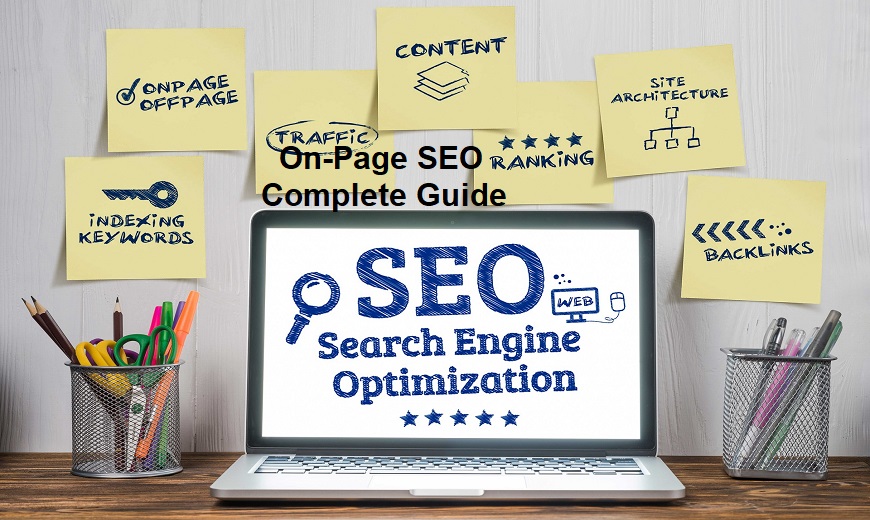
On-Page SEO refers to the process of optimizing individual pages on a website to improve their visibility and relevance for specific search terms. This includes optimizing various elements such as content, meta descriptions, title tags, and HTML source code. On-Page SEO plays a critical role in improving website ranking and attracting organic traffic from search engines.
On-Page SEO is an integral part of any successful SEO strategy. By optimizing your website’s pages with relevant and high-quality content and ensuring that the website’s technical elements are optimized, you can improve your website’s search engine rankings, attract more qualified traffic, and ultimately, increase conversions. With the help of this On-Page SEO: The Complete Guide, you can learn about the best practices and techniques to optimize your website’s pages and achieve better search engine rankings.
On-page SEO is important because it helps search engines understand the content of your website, which can improve your visibility and ranking in search results. If your website is optimized for on-page SEO, search engines will be able to crawl and index your pages more effectively, and users will be more likely to find your website when they search for relevant keywords.
Why is On-Page SEO important?
On-Page SEO is crucial for the success of any website’s SEO strategy. Here are some reasons why On-Page SEO is important:
- Improved website visibility: On-Page SEO helps search engines understand what your website is about and what topics it covers. By optimizing individual pages for specific search terms, you can improve your website’s visibility in search engine results pages (SERPs) and attract more qualified traffic.
- Better user experience: On-Page SEO not only helps search engines understand your website but also helps improve the user experience. By creating high-quality, relevant, and engaging content, you can keep users on your website longer, reduce bounce rates, and increase user engagement.
- Higher search engine rankings: Optimizing your website’s pages for specific search terms and ensuring that the technical elements are optimized can improve your website’s search engine rankings. Higher search engine rankings lead to more organic traffic, which can ultimately lead to more conversions.
- Cost-effective: On-Page SEO is a cost-effective way to improve your website’s SEO performance. By optimizing your website’s pages, you can attract more organic traffic without having to invest heavily in paid advertising.
Overall, On-Page SEO is a critical component of any successful SEO strategy. By optimizing your website’s pages, you can improve your website’s visibility, user experience, and search engine rankings, and ultimately, increase conversions.
On-Page SEO Best Practices
On-Page SEO best practices are a set of techniques and guidelines to optimize individual pages on your website to improve their relevance and authority for specific search terms. These practices involve optimizing various elements on the page, including content, meta descriptions, title tags, and HTML source code. By implementing On-Page SEO best practices, you can improve your website’s search engine rankings, attract more qualified traffic, and ultimately, increase conversions.
On-Page SEO Techniques
On-page SEO techniques refer to the optimization strategies that can be implemented directly on a website or webpage to improve its search engine ranking and visibility. This includes optimizing the website’s content, meta tags, images, URLs, internal linking, and other on-page elements. By optimizing these on-page factors, a website can provide relevant and high-quality content to search engine users, improve its crawlability and indexability, and increase its chances of ranking higher on search engine results pages. On-page SEO is an essential component of any comprehensive SEO strategy and can significantly impact a website’s online visibility and success. Here are some of the most important on-page SEO techniques:
1. Keyword Research
Keyword research is a critical component of On-Page SEO. It involves identifying and analyzing the search terms and phrases that users are using to find the products, services, or information that your website offers. By conducting thorough keyword research, you can identify high-volume, low-competition keywords that can help you rank higher in search engine results pages (SERPs). Keyword research also helps you identify the intent behind users’ search queries, which can help you create more targeted and relevant content. By incorporating the right keywords into your content, meta descriptions, and title tags, you can improve your website’s search engine rankings, attract more qualified traffic, and increase conversions.
2. Title Tag Optimization
Title tag optimization is a crucial element of On-Page SEO. The title tag is an HTML element that specifies the title of a web page. It is displayed in the browser’s title bar and is also used as the clickable headline in search engine results pages (SERPs). Optimizing your title tags involves creating concise, descriptive, and keyword-rich titles that accurately reflect the content of the page. Title tags should be between 50-60 characters and should include the primary keyword for the page. By optimizing your title tags, you can improve your website’s search engine rankings, increase click-through rates, and ultimately, drive more qualified traffic to your website.
3. Meta Description Optimization
Meta description optimization is an essential element of On-Page SEO. The meta description is an HTML attribute that provides a brief summary of the content of a web page. It appears below the title tag in search engine results pages (SERPs) and can influence click-through rates. Optimizing your meta descriptions involves creating compelling and keyword-rich descriptions that accurately reflect the content of the page. Meta descriptions should be between 120-158 characters and should include the primary keyword for the page. By optimizing your meta descriptions, you can improve your website’s search engine rankings, increase click-through rates, and ultimately, drive more qualified traffic to your website.
4. Header Tags Optimization
Header tag optimization is an essential element of On-Page SEO. Header tags (H1, H2, H3, etc.) are HTML elements that are used to structure the content of a web page. The H1 tag is the main heading of the page and should include the primary keyword for the page. Subheadings (H2, H3, etc.) should be used to break up the content into sections and should include relevant keywords. Optimizing header tags involves using descriptive and keyword-rich headings that accurately reflect the content of the page. By optimizing your header tags, you can improve the readability and organization of your content, make it easier for search engines to understand the structure of your page, and improve your website’s search engine rankings.
5. Internal Linking
Internal linking is a critical element of On-Page SEO. It involves linking to other pages within your website to help search engines understand the structure of your website and the relationships between your pages. Internal linking also helps users navigate your website and discover related content. When linking internally, it’s essential to use descriptive anchor text that accurately reflects the content of the linked page. Internal linking should be done naturally and strategically, focusing on linking to related content and pages that are relevant to the user’s journey. By optimizing your internal linking, you can improve the user experience, increase the time users spend on your website, and ultimately, improve your website’s search engine rankings.
6. Image Optimization
Image optimization is an important element of On-Page SEO. It involves optimizing the images on your website to improve their load times, reduce their file sizes, and make them more accessible to search engines. Optimizing images involves compressing them without sacrificing quality, using descriptive filenames and alt text that accurately reflect the content of the image, and optimizing image dimensions to match the size of the image on the page. By optimizing your images, you can improve your website’s load times, make your content more accessible to users with disabilities, and improve your website’s search engine rankings.
7. URL Optimization
URL optimization is a crucial element of On-Page SEO. A URL is the web address of a page and can influence a website’s search engine rankings. Optimizing your URLs involves creating descriptive and keyword-rich URLs that accurately reflect the content of the page. URLs should be short, simple, and easy to read, avoiding special characters and spaces. By optimizing your URLs, you can improve your website’s search engine rankings, make it easier for users to remember and share your URLs, and create a more organized and user-friendly website.
8. Mobile optimization:
Make sure your website is optimized for mobile devices, as more and more users are accessing the internet on their phones and tablets.
9. Page speed
Page speed is a critical factor in on-page SEO. Use tools such as Google PageSpeed Insights or GTmetrix to analyze your page speed, and make necessary optimizations such as reducing image sizes, minifying code, and leveraging browser caching.
10. Schema Markup
Schema Markup is a type of code that can be added to a website’s HTML to provide search engines with more information about the content on the page. This structured data helps search engines better understand the meaning of the content and can lead to enhanced search engine results such as rich snippets, knowledge graphs, and more. Schema Markup includes a set of predefined tags that allow webmasters to provide information such as the name, address, and phone number of a business, reviews, events, and more. By implementing Schema Markup on a website, webmasters can improve their website’s visibility and provide more useful information to search engine users.
On-Page SEO FAQs:
Q: What is the difference between On-Page and Off-Page SEO?
A: On-Page SEO refers to optimizing the content and HTML source code of individual pages on your website, while Off-Page SEO involves building external links and social media signals to increase your website’s authority and relevance.
Q: What are the most important elements of On-Page SEO?
A: Some of the most important elements of On-Page SEO include keyword research and optimization, title tag and meta description optimization, header tag optimization, internal linking, image optimization, URL optimization, and schema markup.
Q: How long does it take to see results from On-Page SEO?
A: Results from On-Page SEO can vary depending on the competitiveness of the keyword and the quality of your optimization. However, it is generally expected that you will see some improvements within a few weeks to a few months after implementing On-Page SEO best practices.
Q: What are some common On-Page SEO mistakes to avoid?
A: Some common On-Page SEO mistakes include keyword stuffing, using irrelevant or low-quality content, using duplicate content, not optimizing meta descriptions and title tags, neglecting image optimization, and having slow page load speeds.
Conclusion:
In conclusion, On-Page SEO is an essential component of a successful SEO strategy. It involves optimizing the content and HTML source code of individual pages on your website to improve their relevance and authority for specific search terms. By implementing the best practices we have discussed in this On-Page SEO: The Complete Guide article, you can help your website rank higher in search engine results pages, attract more qualified traffic, and improve user engagement and conversion rates.
Remember that On-Page SEO is an ongoing process and requires continuous monitoring and improvement. By regularly auditing your website and making necessary changes, you can ensure that your website remains optimized and competitive in search engine rankings.